Lauren A. Oliver

Lauren A.Oliver

Environmental economist, evaluator, and policy strategist. I work at the intersection of quantitative analysis and real-world decisions across energy, climate, and natural resource systems.

Skills
Impact Evaluation M&E Strategy Policy Analysis Sustainable Finance Causal Inference Data & Research Consulting
Based
New Haven, CT
Available for
Consulting & full-time
Background
Engineering · Aid · Policy
Contact
lauren.oliver@yale.edu

About

Lauren A.Oliver

I study why progress is harder than it looks — and what it takes to move it forward. My work sits at the intersection of data, policy, and the messy reality of how people and institutions make decisions, with a focus on energy, climate, and natural resource systems.

Colorado landscape
Career Milestones
2018
Engineering

Civil Engineering, Santa Clara University

I left high school knowing I wanted to work in natural resources and do something good in the world, but not knowing what. My father’s advice was to “do the hardest thing” and establish a strong technical foundation from which I could build my career. It was great advice.

2017–19
Social Entrepreneurship

An introduction to social entrepreneurship

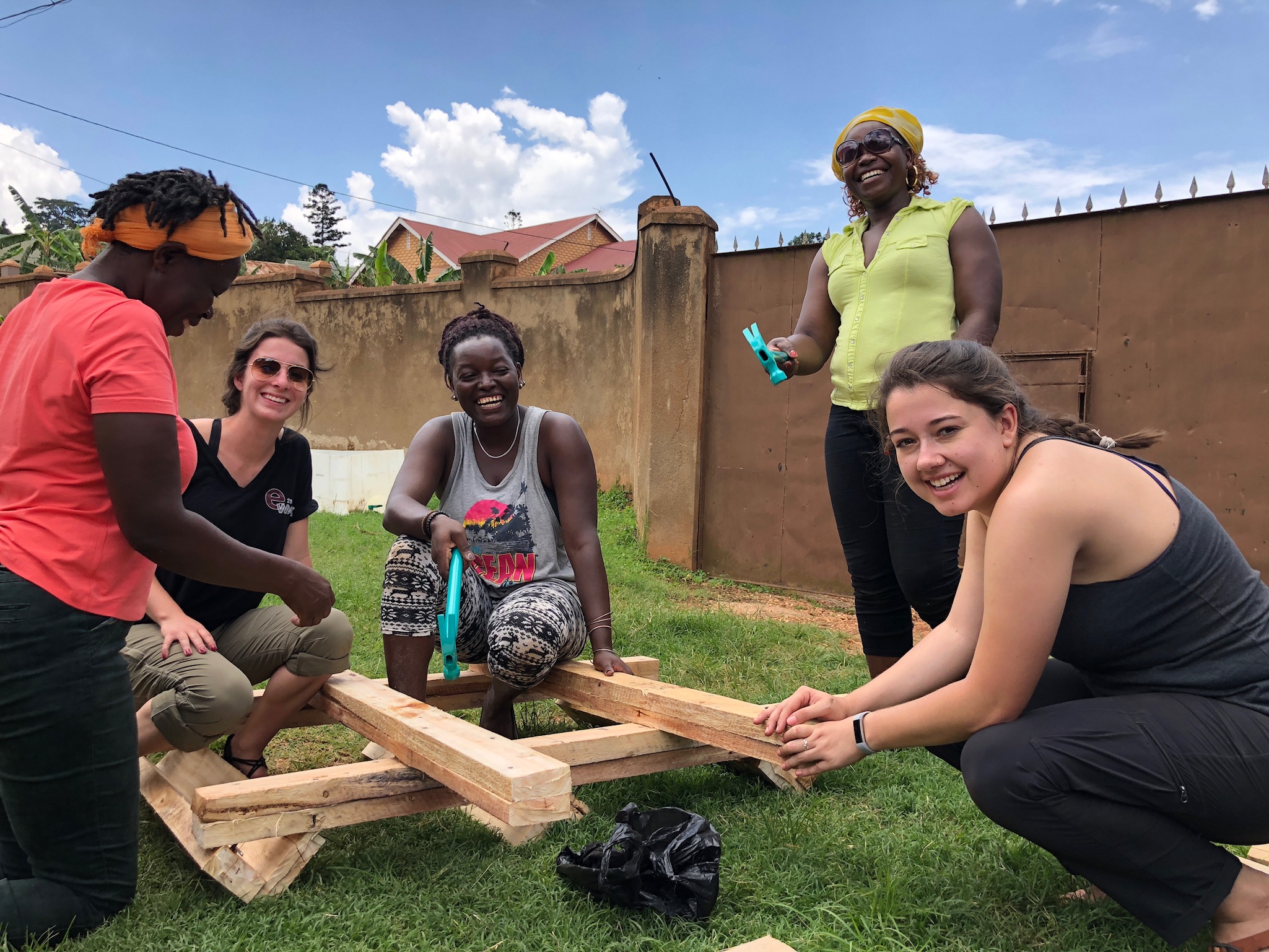
Going to school in the Bay Area meant constant exposure to the start-up world. For me, that took shape through work with the Miller Center for Global Impact, an accelerator supporting social enterprises around the world. I conducted market research in Uganda and helped launch an online program for last-mile delivery businesses working to expand access to life-saving technologies in the Global South.

After graduation, I spent a gap year at Patagonia, where I saw another model for mission-driven work in practice.

Together, those experiences reshaped how I think about sustainability — not just as environmental stewardship, but as the ability to build organizations that can survive, grow, and keep delivering impact over time. Profit can even play a role, not as something at odds with impact, but often what makes long-term impact possible.

2019
Field Work

Peace Corps, Benin

I joined the Peace Corps because I wanted to understand the realities of development work firsthand. I learned French, lived in a rural village in Benin, and was welcomed by an extraordinary host family and community. The experience forced me to confront the complexity of poverty, climate vulnerability, and the systems that can unintentionally stall progress.

My service ended abruptly in 2020 due to COVID-19, and in many ways it has never felt fully complete. Even so, my time in Benin continues to shape both my research and my sense of responsibility. Much of my work is still driven by a desire to contribute, in some meaningful way, to a better future for the people and communities who welcomed me there.

2020
Global Policy

Policy and Sustainable Development, University of Notre Dame

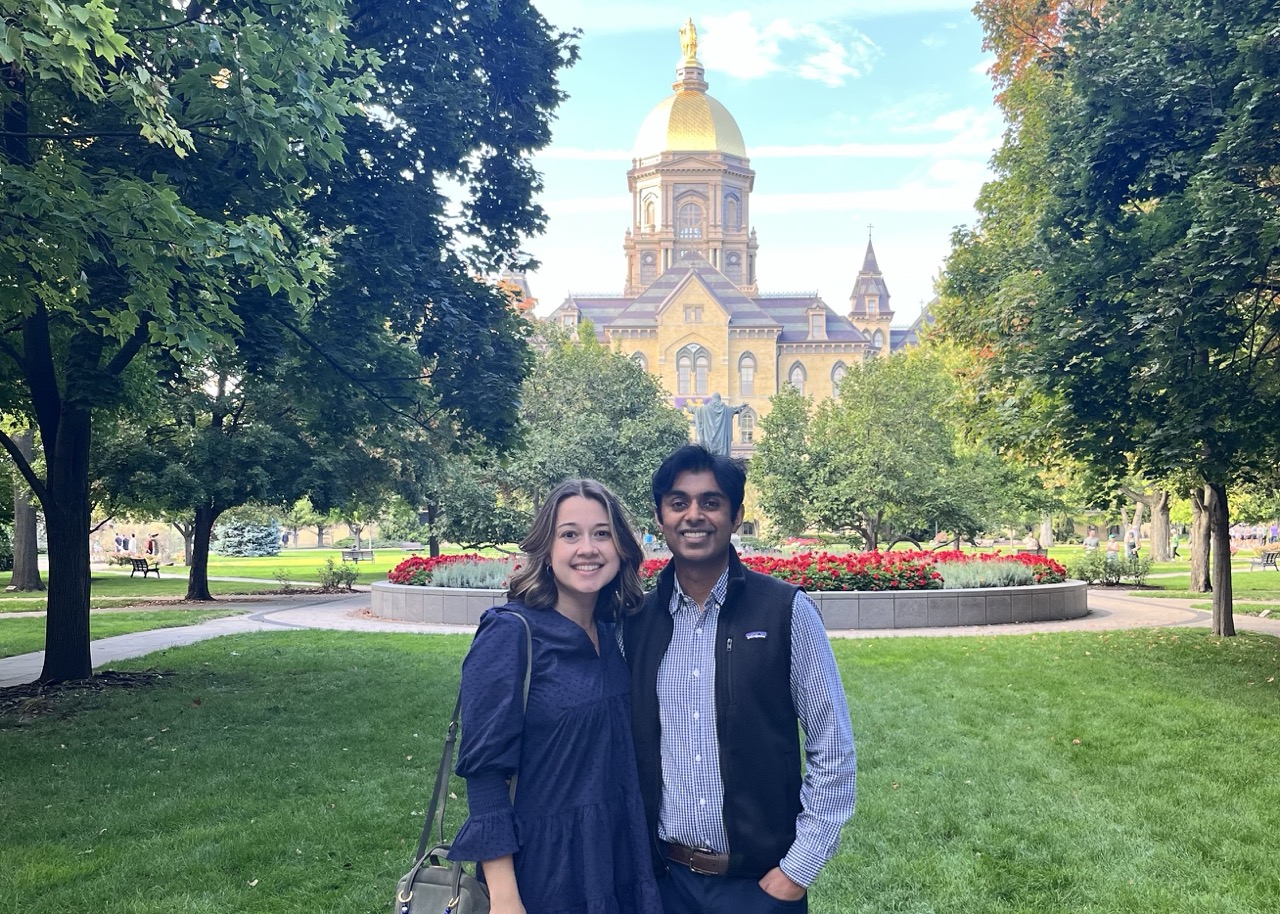
Anyone who wants to create meaningful change needs to understand policy. That is what brought me to the Keough School of Global Affairs at the University of Notre Dame, where I learned how to evaluate, design, and communicate policy across sectors and institutions.

Not a day goes by that I don’t use my policy training. Whether I am conducting research, teaching, analyzing markets, or simply writing emails, my policy background shapes how I think about incentives, institutions, and the gap between good ideas and real-world implementation.

2022–
PhD · Yale

Yale School of the Environment

I chose the Yale School of the Environment because I wanted to pursue research that could help unlock practical solutions while preparing me to lead in the environmental sector. During my time at Yale, I have strengthened my analytical training through coursework in political science and economics, developed my communication and teaching skills as a teaching fellow, and worked closely with the Yale Center for Business and the Environment to connect ideas to real-world implementation.

Along the way, I discovered a new outlet for my interests beyond the development aid sector: the energy and climate space. What drew me in was the combination of urgency, innovation, and complexity. It is a field that demands technical analysis, strategic thinking, communication, and policy fluency all at once — exactly the kind of work I want to be doing.

Beginning in 2026, I am excited to return more directly to the world of business strategy and startups through new collaborations with Yale Ventures and Yale Planetary Solutions.

Where I’m headed

I’m actively looking for full-time roles and consulting engagements — at climate-focused startups or companies, in sustainability and ESG consulting, in energy and climate policy, or anywhere the analysis is rigorous and the goal is to actually change something. I work best at the intersection of technical, policy, and community conversations.

On a personal note

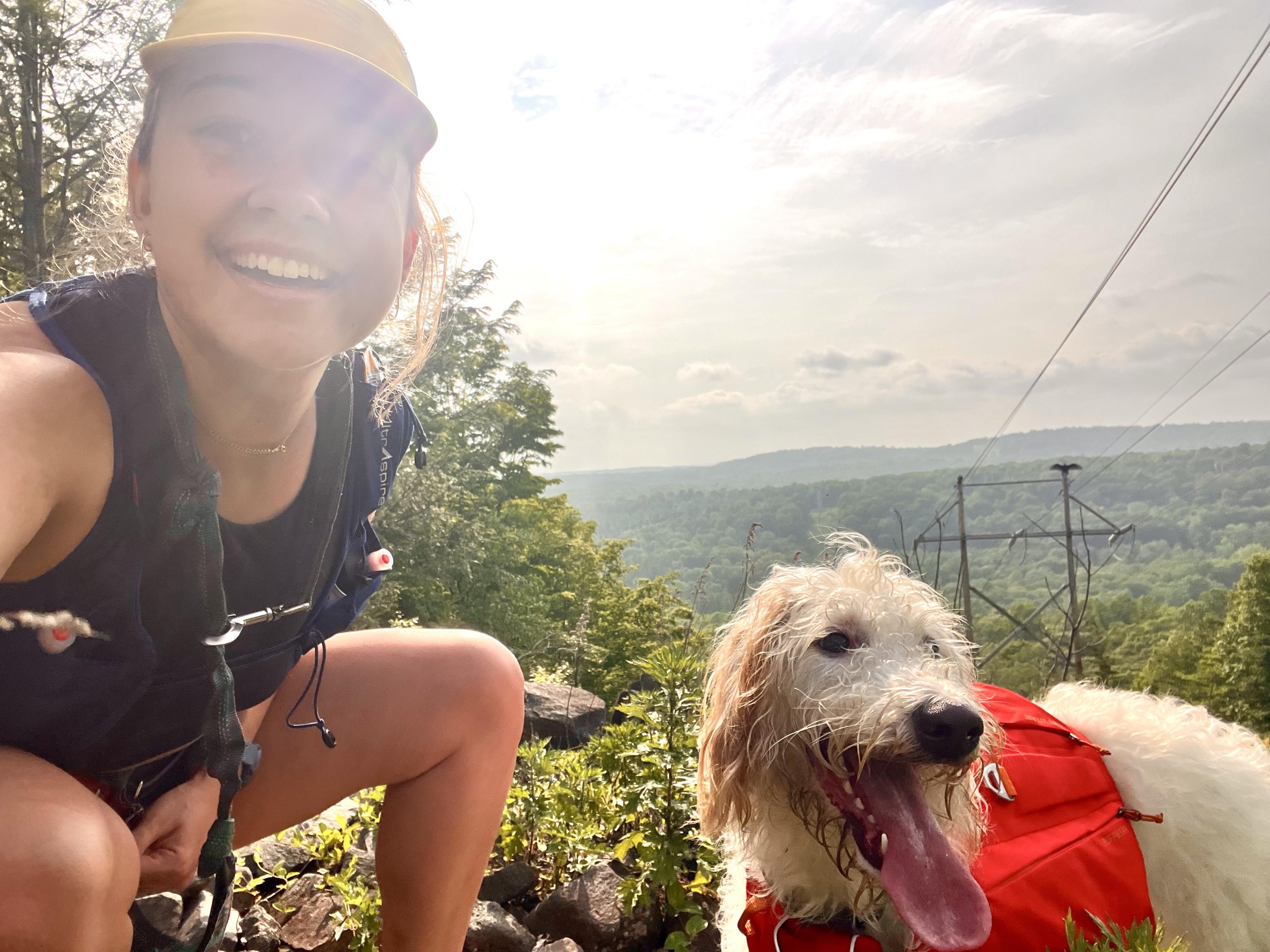
I grew up between Arizona and Colorado — my dad an environmental consultant, my mom a high school teacher. Both are models of quiet, relentless dedication to work that matters, and that’s the kind of success I’m after too. I moved to New Haven in 2022 for the PhD and ended up staying — converted by the seasons, the lakes, and a CT native I met my first week here. I like run long distances, visit local breweries, and listen to podcasts. I am rarely seen without my dog Tala, a high-energy poodle-lab-collie mix who snuggles next to me through all of it.

Photos
Projects

The work & the
thinking behind it

What I think about

What does the data say — and what is it missing?

Every dataset embeds decisions about what to measure, how, and whose priorities shaped those choices. The gaps are often more informative than the data itself, if you’re willing to sit with them.

What goes wrong that nobody modeled?

Interventions create externalities and policies produce unintended consequences. When real-world dynamics diverge sharply from predictions — that’s usually where the most useful insight lives, and where better models get built.

Projects

Dissertation

Investment, constraints, and what holds progress back

My dissertation studies agricultural investment in Benin following a land rights program — specifically, whether farmers invested more once tenure insecurity was removed. The more interesting questions arise when the answer is complicated: what other constraints are binding, and how do we model systems of intertwined barriers? The Benin context is specific, but the framework applies directly to questions about what holds back investment in clean energy and climate solutions.

CBEY, Yale
2023–2026

Making clean energy legible across disciplines

Content strategy and curriculum development for a 10-month online certificate in clean energy for 120 mid-career professionals. The challenge was translation — making financial logic legible to engineers, technical constraints legible to financiers, policy tradeoffs legible to everyone. Managed the full content lifecycle and a 6-person TA team.

Clean EnergyCurriculum DesignProgram Management
UNDP — New York
2023–2024

Why do environmental projects stop working when donors leave?

Diagnosed why UNDP environmental projects consistently lost impact after donor exit. Synthesized 100+ evaluations, identified gaps in existing frameworks, and designed a portfolio-level M&E strategy for 30 projects — including 16 new sustainability indicators built to work within real monitoring budgets.

M&E DesignIndicator DevelopmentEnvironmental Policy
Catholic Relief Services — Malawi
2021

Two evaluations, opposite conclusions — what went wrong?

Led 8 weeks of qualitative field research — 28 focus groups, 40 key informant interviews — to resolve why two evaluations of the same national program reached opposite conclusions. The core issue was methodological: different proxies being treated as equivalent. Delivered recommendations, case studies, and a policy brief.

Qualitative ResearchImpact EvaluationPolicy Brief
Food and Agriculture Organization — Uganda
2021–2022

What does permanent settlement actually look like? Refugee integration in Uganda

Mixed-methods research on how economic integration works between refugee settlements and host communities in Uganda — a country with an unusually generous refugee policy granting permanent settlement, land rights, and work permits. Served as data analyst and qualitative research lead. Published in the Journal of Development Studies.

Mixed MethodsRefugee PolicyUgandaPublished
Peace Corps — Benin
2019–2020

What I actually learned in Coussi

Designed and delivered environmental programs for 175+ students in French. Evacuated mid-service when COVID hit. What I actually learned was about the distance between how an intervention looks on paper and how it lands — the community trust that has to exist before anything else works, and what it means when it doesn’t.

Community DevelopmentFrenchWest Africa
Hard skills
Statistical
R / RStudio, STATA
Spatial
GIS, Google Earth Engine
Methods
Causal inference, DiD, RDD, IV
Evaluation
Impact eval, M&E, additionality
Data
Admin & remote sensing datasets
Languages
English (native), French (professional)
Where I want to take this next

Problems I’m actively looking to work on — through a full-time role at a climate tech startup or established company, a policy shop, or a consulting engagement.

01
What makes a carbon credit real?

Additionality — whether a credit represents reductions that wouldn’t have happened anyway — is the central hard problem in carbon markets. Getting it right is the difference between a serious climate tool and an accounting exercise.

02
Fossil fuels and the honest mid-transition

Decarbonization is necessary. It’s also not instantaneous. Firm, reliable power matters in the meantime — and when grids fail, the consequences fall hardest on people with the fewest options. An honest transition strategy accounts for sequencing, not just endpoints.

03
When models meet reality and lose

My research has repeatedly surfaced cases where lifting a constraint doesn’t produce predicted behavior, or where binding constraints interact invisibly. This isn’t a failure of economics — it’s an invitation to build better models, if we’re honest about what current ones miss.

04
Bringing climate and energy solutions to market

The gap between what’s technically possible and what actually scales is almost always a policy, finance, or behavior problem — not an engineering one. I’m drawn to early-stage climate tech and energy startups where the work is about bridging that gap: building the evidence base, understanding the market barriers, and making the case for what’s worth backing.

CV & Resume

Experience &
Credentials

Education
2022–2027
(expected)

PhD, Environmental Economics & Policy

Yale University, School of the Environment

Dissertation: investment constraints and land tenure in Benin. Methods: causal inference, GIS, remote sensing.

2020–2022

Master of Global Affairs, Sustainable Development

University of Notre Dame, Keough School of Global Affairs
2014–2018

BS, Civil Engineering (Honors)

Santa Clara University, School of Engineering

Richard J. Riordan Award for Community Service · Humanitarian Award

Teaching
2022–present

Teaching Fellow

Yale School of the Environment
  • ENV 800: Energy Economics and Policy — Graduate · Prof. Ken Gillingham
  • ENAS 2170: Disruptive Technology and Responsible Innovation — Undergraduate · Prof. Kathryn Guarini
  • ENV 850: Financing Climate Adaptation — Graduate · Prof. Pradeep Kurukulasuriya
Professional Experience
2022–present

Doctoral Researcher

Yale University

Investment constraints, land tenure, causal inference. Policy-facing research across development economics and environmental policy.

2023–2026

Online Learning Associate

Center for Business and Environment at Yale (CBEY)

Content strategy, curriculum, and program management for 10-month clean energy certificate. 120 participants, 6-member TA team.

2023–2024

Evaluation Strategy Consultant

United Nations Development Programme

M&E strategy for 30-project environmental portfolio. 16 new sustainability indicators aligned with donor requirements.

2021

Strategy Consultant & Research Lead

Catholic Relief Services — Lilongwe, Malawi

Led qualitative field research (28 FGDs, 40 KIIs) to evaluate national aid program and resolve contradictory assessments.

2021–2022

Data Analyst & Qualitative Research Lead

Food and Agriculture Organization — Uganda

Mixed-methods research on refugee-host community economic integration. Published in Journal of Development Studies.

2019–2020

Sustainable Agriculture Volunteer

Peace Corps — Coussi, Benin

Environmental programs for 175+ students in French. Service ended early due to COVID-19 evacuation.

Publications
Economic Integration between Refugee Settlements and Host Communities
Oliver, Lauren, Marco D’Errico, and Paul Winters
The Journal of Development Studies, 60(3): 360–79, 2024
Transfers as a Means to Mitigate COVID-19 Impacts on Food Security: Evidence from Refugee and Host Communities Uganda
Errico, Marco d’, Ellestina Jumbe, Lauren Oliver, Rebecca Pietrelli, Irene Staffieri, and Paul Winters
The Journal of Development Studies, 60(3): 432–56, 2024
Leadership & Service
2024–2027

Advisory Council Member

Keough School of Global Affairs, University of Notre Dame

One of two alumni on a 20-member board advising on strategic priorities and donor engagement.

Technical Skills
Statistical
R / RStudio, STATA
Spatial
GIS, Google Earth Engine
Methods
Causal inference, DiD, RDD, IV
Evaluation
Impact eval, M&E, additionality
Data
Admin & remote sensing datasets
Languages
English (native), French (professional)
Open tabs

What I’m
reading lately

A dynamic list of news articles, podcasts, blogs, and other current sources of inspiration. Suggestions welcome.

RFF
Resources for the Future
Aaron Bergman’s series on updates to the GHG Protocol asks the right questions about carbon accounting. The answer is more complicated than “yes, obviously.”
Carbon Accounting
UCLA
UCLA IoES + Resources Radio
Grubert’s framing of the “mid-transition” is one of the more useful concepts I’ve encountered. The transition isn’t just a destination problem — it’s a sequencing and governance problem.
Energy Transition
Volts
When large industrial loads drive up grid costs, who bears the burden? The answer — predominantly renters and low-income households — is a textbook externality that gets missed when you’re only counting carbon.
Grid & Equity
WSJ
Wall Street Journal
The backlash is real and some of it is rational. The honest answer involves actual cost-benefit analysis, not dismissing skeptics — which most tech-optimist commentary gets wrong.
Technology & Tradeoffs
Have a recommendation? Especially interested in political economy of energy transitions, carbon market design, and development-climate tensions. lauren.oliver@yale.edu